1. Concept of Biodiversity
Biodiversity, a contraction of “biological diversity,” refers to the vast variety of life on Earth. It is not merely a list of all the species, like a catalogue, but a complex, multi-level concept that encompasses the full spectrum of biological organization.
The concept is most commonly broken down into three fundamental levels:
A. Genetic Diversity
This is the variety of genes within a species. It refers to the genetic variation between individuals and between populations within a species.
- Example 1: Different breeds of dogs (Chihuahua, German Shepherd, Golden Retriever) all belong to the same species (Canis lupus familiaris) but have immense genetic diversity that results in different sizes, colors, temperaments, and susceptibilities to disease.
- Example 2: Different varieties of rice (e.g., Basmati, Jasmine, Arborio) have different genetic makeups that make them suited to different climates, soils, and culinary uses.
- Importance: High genetic diversity allows a species to adapt to changing environmental conditions (e.g., climate change, new diseases). A population with low genetic diversity is more vulnerable to extinction.
B. Species Diversity
This is the variety of species within a habitat or a region. It is the most commonly recognized level of biodiversity. It encompasses two components:
- Species Richness: The simple count of how many different species are present in a given area.
- Species Evenness: The relative abundance of each species. An ecosystem where several species have similar population sizes is considered more diverse and stable than one where one species is dominant and the others are rare.
- Example: A forest with 50 tree species where each species is roughly equally common has higher species diversity than a forest with 50 tree species where one species makes up 90% of the trees.
C. Ecosystem Diversity
This refers to the variety of ecosystems, habitats, and ecological processes within a region or the entire biosphere. It encompasses the differences in biotic communities and the abiotic (non-living) factors that shape them.
- Examples: The range of different ecosystems on Earth, such as tropical rainforests, coral reefs, deserts, tundras, wetlands, and grasslands. Each of these ecosystems has a unique community of species and plays a distinct role in the biosphere.
In summary, biodiversity is the intricate web of life at the genetic, species, and ecosystem levels, all interconnected and interdependent.
2. Patterns of Biodiversity
Scientists have observed that biodiversity is not evenly distributed across the globe. It follows some distinct and predictable spatial patterns.
A. Latitudinal Gradient
This is the most prominent global pattern: species diversity decreases as we move from the equator towards the poles.
- Observation: Tropical regions near the equator (e.g., the Amazon Basin, Congo Basin) teem with an immense number of species, while polar regions (Arctic and Antarctic) have relatively few.
- Reasons for this pattern:
- Solar Energy and Climate: Tropical regions receive more solar energy, leading to higher productivity (more plant growth), which can support a larger and more complex food web.
- Stability: Tropical climates are relatively stable and predictable year-round, allowing species to specialize in narrow niches without having to adapt to extreme seasonal changes.
- Evolutionary History: The tropics are older and have had more stable climates over geological time, allowing for a longer period of evolution and speciation with fewer mass extinctions.
- Spatial Heterogeneity: Tropical forests are often more complex in structure, providing a greater variety of microhabitats and niches.
B. Species-Area Relationship
This pattern states that, all other factors being equal, a larger geographic area will contain more species than a smaller one.
- Observation: A large continent will have more species than a small island. A large forest patch will typically have more species than a small patch.
- Reason: Larger areas can support larger populations, which are less prone to extinction. They also tend to have a greater diversity of habitats, which can support a wider range of species.
C. Altitudinal Gradient
Similar to the latitudinal gradient, species diversity generally decreases as we move up a mountain.
- Observation: The base of a mountain in a tropical region may have rainforest-like diversity, which gives way to temperate forests, then coniferous forests, and finally alpine tundra and bare rock at the summit, with diversity decreasing at each step.
- Reason: This is essentially a compressed version of the latitudinal gradient, driven by changes in temperature, oxygen, and climate with increasing altitude.
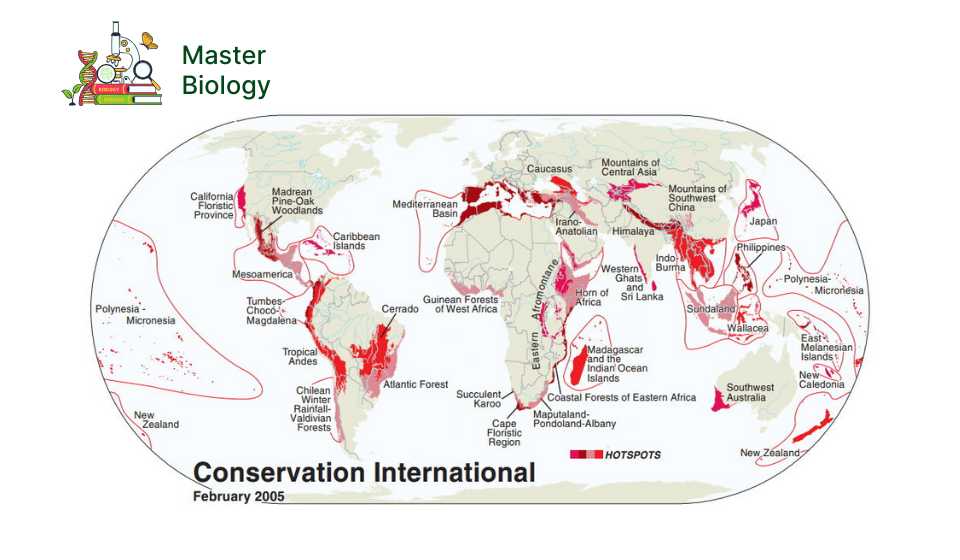
D. Biodiversity “Hotspots”
To prioritize conservation efforts, scientists have identified regions that are both exceptionally rich in species and highly threatened. To qualify as a hotspot, a region must meet two criteria:
- It must contain at least 1,500 species of vascular plants as endemics (species found nowhere else on Earth).
- It must have lost at least 70% of its original natural vegetation.
- Examples: The Caribbean Islands, the Western Ghats of India, the Philippines, and the Cape Floristic Region of South Africa.
3. Importance of Biodiversity
Biodiversity is not just a aesthetic luxury; it is the foundation upon which human civilization and well-being are built. Its importance can be categorized into several groups of services and values.
A. Ecosystem Services (Functional Importance)
These are the essential processes that sustain human life and are provided by healthy, biodiverse ecosystems.
- Provisioning Services: Products obtained from ecosystems.
- Food: Crops, fish, livestock, wild foods.
- Water: Fresh water for drinking, irrigation, and industry.
- Raw Materials: Timber, fibers, fuels, and medicinal resources (many modern medicines are derived from plants and microbes).
- Regulating Services: Benefits obtained from the regulation of ecosystem processes.
- Climate Regulation: Forests act as carbon sinks, mitigating climate change.
- Pollination: Over 75% of the world’s leading food crops rely on animal pollinators (bees, bats, birds).
- Pest and Disease Control: A diverse ecosystem has natural predators that keep pest populations in check.
- Water Purification and Air Quality: Wetlands filter pollutants from water, and plants absorb airborne pollutants.
- Flood and Erosion Control: Root systems of diverse plants bind soil and absorb excess water.
B. Economic Benefits (Utilitarian Value)
Biodiversity has direct and significant economic value.
- Agriculture: Wild relatives of crops are a crucial genetic reservoir for developing new, more resilient, and productive varieties.
- Medicine: A significant proportion of pharmaceuticals are derived from or inspired by biological compounds (e.g., aspirin from willow bark, penicillin from fungus, cancer drugs from the Pacific Yew tree).
- Tourism and Recreation: Ecotourism, bird watching, hiking, and fishing are multi-billion dollar industries that depend directly on biodiversity.
- Industry: Biomimicry (design inspired by nature) leads to innovations like Velcro (inspired by burrs) and more efficient wind turbines (inspired by whale fins).
C. Ethical, Cultural, and Aesthetic Values (Intrinsic Value)
Many people believe that species have an intrinsic right to exist, independent of their use to humans.
- Cultural Identity: Many cultures and religions are deeply intertwined with nature and specific species (e.g., the sacred cow in Hinduism, the bald eagle as a U.S. national symbol).
- Aesthetic and Recreational Value: The beauty and wonder of nature are a source of inspiration, art, and spiritual enrichment.
- Bequest Value: The value of knowing that biodiversity will be preserved for future generations.
D. Insurance and Resilience (Functional Importance)
This is perhaps the most critical scientific reason for preserving biodiversity.
- The “Insurance Hypothesis”: A diverse ecosystem is more stable and resilient to disturbances like drought, fire, or disease. If one species is wiped out, others with similar functions can fill its role, and the ecosystem continues to function. A monoculture (low diversity) is extremely vulnerable to collapse.
- Example: In a diverse forest, if a disease kills one tree species, other species will persist. In a plantation of a single tree species, the same disease could destroy the entire ecosystem.
In conclusion, biodiversity is the complex and varied fabric of life, distributed in predictable patterns across the globe. Its immense value, from the air we breathe to the stability of our climate and the resilience of our food systems, makes its conservation one of the most critical challenges of our time.