Introduction
The molecular architecture of genetic material represents one of biology’s most elegant designs, providing the physical basis for heredity and cellular function. Understanding how nucleic acids are structured and organized within cells reveals fundamental insights into life processes at the molecular level. This article explores the detailed structures of DNA and RNA, their distinctive characteristics, and the remarkable packaging strategies that enable meters of DNA to fit within microscopic cellular spaces while remaining functionally accessible.
1 Structure of DNA: The Double Helix
Deoxyribonucleic acid (DNA) possesses a sophisticated structure that enables it to serve as the perfect repository for genetic information.
1.1 Nucleotide Components
DNA is composed of repeating units called nucleotides, each consisting of three molecular components:
- Deoxyribose sugar: A five-carbon sugar molecule that forms the backbone of the DNA strand
- Phosphate group: Provides the structural linkage between sugars and contributes negative charge
- Nitrogenous bases: The information-carrying components divided into two categories:
- Purines (double-ring structures): Adenine (A) and Guanine (G)
- Pyrimidines (single-ring structures): Cytosine (C) and Thymine (T)
1.2 The Double Helical Architecture
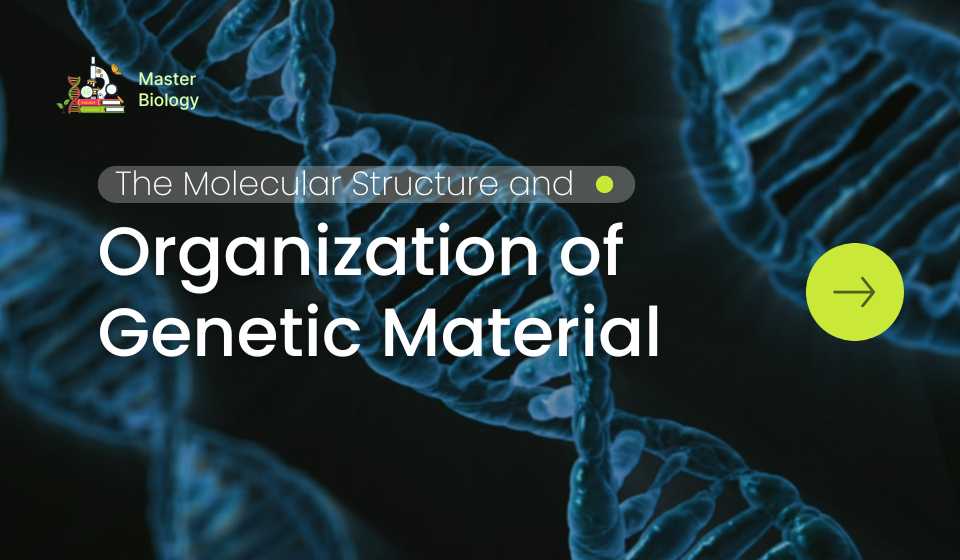
The Watson-Crick model describes DNA as a right-handed double helix with specific structural features:
- Antiparallel strands: The two polynucleotide chains run in opposite directions (5’→3′ and 3’→5′)
- Complementary base pairing: Adenine always pairs with Thymine (A-T) via two hydrogen bonds, while Guanine always pairs with Cytosine (G-C) via three hydrogen bonds
- Major and minor grooves: The asymmetrical arrangement of the backbone creates grooves of different sizes that serve as recognition sites for DNA-binding proteins
1.3 Structural Forms of DNA
DNA can exist in several conformational forms under different conditions:
- B-DNA: The most common biological form, a right-handed helix with approximately 10.5 base pairs per turn
- A-DNA: A shorter, wider right-handed helix that forms under dehydrating conditions
- Z-DNA: A left-handed helical form that may play roles in gene regulation
Table: Structural Characteristics of DNA Forms
| Parameter | B-DNA | A-DNA | Z-DNA |
|---|---|---|---|
| Helix sense | Right-handed | Right-handed | Left-handed |
| Base pairs per turn | 10.5 | 11 | 12 |
| Helical diameter | 20 Å | 23 Å | 18 Å |
| Major groove | Wide and deep | Narrow and deep | Flat |
| Minor groove | Narrow and shallow | Wide and shallow | Narrow and deep |
2 Structure of RNA: The Versatile Nucleic Acid
Ribonucleic acid (RNA) exhibits structural diversity that enables it to perform multiple functions in gene expression.
2.1 Fundamental Chemical Differences from DNA
RNA differs from DNA in three critical aspects:
- Ribose sugar: Contains a 2′-hydroxyl group that makes RNA more chemically reactive
- Base composition: Uses uracil (U) instead of thymine, pairing with adenine
- Structural stability: Generally single-stranded and less chemically stable than DNA
2.2 Types and Structures of RNA
Different RNA types have evolved distinct structures suited to their specific functions:
Messenger RNA (mRNA)
- Linear molecule that carries genetic information from DNA to ribosomes
- Contains protein-coding regions flanked by untranslated regions (UTRs)
- Features a 5′ cap and 3′ poly-A tail for stability and regulation
Transfer RNA (tRNA)
- Cloverleaf secondary structure that folds into an L-shaped tertiary structure
- Contains an anticodon loop for codon recognition and an acceptor stem for amino acid attachment
- Numerous modified bases that contribute to structural stability and function
Ribosomal RNA (rRNA)
- Complex secondary and tertiary structures that form the catalytic core of ribosomes
- Multiple types (e.g., 16S, 23S, 5S in bacteria) that assemble with proteins to form functional ribosomes
Non-coding RNAs
- Includes microRNAs, siRNAs, and long non-coding RNAs with diverse regulatory functions
- Form stem-loop structures and complex three-dimensional folds that enable specific molecular interactions
2.3 RNA Structural Motifs
RNA molecules contain recognizable structural patterns:
- Stem-loops (hairpins): Regions of base-paired stems with unpaired loops
- Internal loops: Unpaired nucleotides within otherwise paired regions
- Bulges: Unpaired nucleotides on one strand of a duplex
- Pseudoknots: Complex tertiary interactions between loop regions and outside sequences
3 DNA Packaging: From Nucleotides to Chromosomes
The packaging of DNA represents one of nature’s most remarkable feats of molecular engineering, compressing DNA molecules thousands of times their length into microscopic nuclei while maintaining regulated access to genetic information.
3.1 The First Level of Packaging: Nucleosomes
The fundamental unit of eukaryotic DNA packaging is the nucleosome:
- Core histones: Eight proteins (two each of H2A, H2B, H3, and H4) form an octamer core
- DNA wrapping: Approximately 147 base pairs of DNA wrap around the histone core in 1.65 left-handed superhelical turns
- Linker DNA: 20-60 base pairs connect adjacent nucleosomes
- Histone H1: The linker histone that binds to DNA as it enters and exits the nucleosome, facilitating higher-order compaction
3.2 Higher-Order Chromatin Structure
Nucleosomes organize into progressively more compact structures:
- 10 nm fiber: The “beads-on-a-string” nucleosomal array
- 30 nm fiber: A compact solenoid structure stabilized by histone H1 and histone-tail interactions
- Chromatin loops: 30 nm fibers form loops attached to a protein scaffold, condensing DNA further
- Metaphase chromosomes: The most highly condensed form, visible during cell division
3.3 Chromatin States and Gene Regulation
The packaging state of DNA directly influences genetic activity:
Euchromatin
- Loosely packed, transcriptionally active chromatin
- Rich in genes and generally replicated early in S phase
- Contains histone modifications associated with gene activation (e.g., H3K4me3, histone acetylation)
Heterochromatin
- Highly condensed, transcriptionally inactive chromatin
- Found at centromeres, telomeres, and other gene-poor regions
- Contains repressive histone marks (e.g., H3K9me3, H3K27me3)
- Replicated late in S phase
3.4 Specialized Packaging Structures
Telomeres
- Protective caps at chromosome ends consisting of TTAGGG repeats
- Form T-loop structures that prevent DNA degradation and end-to-end fusion
- Maintained by telomerase in stem cells and cancer cells
Centromeres
- Specialized constriction points for spindle attachment during cell division
- Contain unique histone variant CENP-A in place of canonical H3
- Form kinetochore complexes for microtubule attachment
Table: Levels of DNA Packaging in Eukaryotes
| Packaging Level | Structure | Compaction Ratio | Key Features |
|---|---|---|---|
| Naked DNA | Double helix | 1:1 | 2 nm diameter |
| Nucleosomes | Beads on a string | 6:1 | 11 nm fiber, histone octamers |
| 30 nm fiber | Solenoid/zigzag | 40:1 | Histone H1 dependent |
| Chromatin loops | Scaffold-attached | 700:1 | 300 nm fiber, SAR/MAR elements |
| Metaphase chromosome | Highly condensed | 10,000:1 | 700 nm diameter, visible by light microscopy |
4 Dynamic Regulation of Chromatin Structure
Chromatin is not static but undergoes constant remodeling to regulate DNA accessibility:
4.1 ATP-Dependent Chromatin Remodeling
Multi-protein complexes use ATP hydrolysis to:
- Slide nucleosomes along DNA
- Evict nucleosomes from specific regions
- Exchange histone variants
- Alter nucleosome composition
4.2 Histone Modifications
Post-translational modifications of histone tails create a “histone code” that influences chromatin structure:
- Acetylation: Neutralizes positive charge, reducing histone-DNA affinity (generally activating)
- Methylation: Can be either activating or repressing depending on the modified residue
- Phosphorylation: Important for chromosome condensation during mitosis
- Ubiquitination: Involved in transcriptional regulation and DNA repair
4.3 DNA Methylation
The addition of methyl groups to cytosine bases in CpG islands:
- Generally associated with transcriptional repression
- Important for X-chromosome inactivation and genomic imprinting
- Heritable through cell divisions, providing epigenetic memory
Conclusion
The molecular structure and organization of genetic material represent a perfect integration of form and function. DNA’s double-helical structure provides chemical stability while enabling precise replication and information retrieval. RNA’s structural versatility supports its multiple roles in gene expression, from information carrier to catalytic molecule. Most remarkably, the hierarchical packaging of DNA into chromatin allows for extraordinary compaction while maintaining regulated access to genetic information through dynamic structural modifications. Understanding these organizational principles continues to reveal profound insights into how genetic information is stored, protected, and utilized in living systems, with far-reaching implications for medicine and biotechnology.