Q1. Keel is characteristic of the flowers of:
Correct Answer: (d)
The flowers of this family (Fabaceae - Bean) have butterfly shaped corolla. The two anterior petals called keel are fused enclosing stamens and carpels.
The flowers of this family (Fabaceae - Bean) have butterfly shaped corolla. The two anterior petals called keel are fused enclosing stamens and carpels.
Q2. Ovary is half-inferior in the flowers of:
Correct Answer: (b)
A flower in which floral parts arise from around the ovary is called perigynous. In this, the ovary is half inferior and half superior. It can be seen in the flowers of plum, peach etc.
A flower in which floral parts arise from around the ovary is called perigynous. In this, the ovary is half inferior and half superior. It can be seen in the flowers of plum, peach etc.
Q3. Pineapple (ananas) fruit develops from
Correct Answer: (b)
Pineapple (Ananas sativus) is a sorosis fruit developed from a composite inflorescence which is actually a cluster of compactly borne flowers on a common axis.
Pineapple (Ananas sativus) is a sorosis fruit developed from a composite inflorescence which is actually a cluster of compactly borne flowers on a common axis.
Q4. Bicarpellary gynoecium and oblique ovary occures in
Correct Answer: (d)
Brinjal belongs to Solanaceae. In Solanaceae, bicarpellary ovary with oblique septa is present.
Brinjal belongs to Solanaceae. In Solanaceae, bicarpellary ovary with oblique septa is present.
Q5. Flowers are unisexual in:
Correct Answer: (a)
Flowers are unisexual in Cucumber (Cucurbitaceae).
Flowers are unisexual in Cucumber (Cucurbitaceae).
Q6. Roots of which plant contains an oxidising agent?
Correct Answer: (b)
In the roots of soyabean plant, leghaemoglobin, a pigment with affinity for oxygen, is found. It acts as an oxygen scavenger.
In the roots of soyabean plant, leghaemoglobin, a pigment with affinity for oxygen, is found. It acts as an oxygen scavenger.
Q7. Vexillary aestivation is characteristic of the family
Correct Answer: (a)
Vexillary aestivation is characteristic of the family Fabaceae.
Vexillary aestivation is characteristic of the family Fabaceae.
Q8. Which one of the following organisms is correctly matched with its three characteristics?
Correct Answer: (c)
Onion (Allium cepa) - Bulb, Imbricate aestivation, Axile placentation. (Pea is Non-endospermic. Maize is C4).
Onion (Allium cepa) - Bulb, Imbricate aestivation, Axile placentation. (Pea is Non-endospermic. Maize is C4).
Q9. Cymose inflorescence is present in :
Correct Answer: (a)
Cymose inflorescence is present in Solanum (Solanaceae).
Cymose inflorescence is present in Solanum (Solanaceae).
Q10. Hypanthodium is
Correct Answer: (c)
Hypanthodium is a special kind of inflorescence where the receptacle is usually fleshy and flask-shaped. e.g. Ficus.
Hypanthodium is a special kind of inflorescence where the receptacle is usually fleshy and flask-shaped. e.g. Ficus.
Q11. Edible part of banana is
Correct Answer: (b)
Banana is a fleshy fruit with rich sugar content. Edible part is fleshy mesocarp and rudimentary endocarp, develops from trilocular, inferior ovary.
Banana is a fleshy fruit with rich sugar content. Edible part is fleshy mesocarp and rudimentary endocarp, develops from trilocular, inferior ovary.
Q12. Replum is present in the ovary of flower of
Correct Answer: (b)
Replum is present in the ovary of flower of mustard. A false septum called replum develops between the two parietal placentae in mustard and other members of family Brassicaceae.
Replum is present in the ovary of flower of mustard. A false septum called replum develops between the two parietal placentae in mustard and other members of family Brassicaceae.
Q13. Among flowers of Calotropis, tulip, Sesbania, Asparagus, Colchicine, Sweet pea, Petunia, Indigofera, Mustard, Soyabean, Tobacco and groundnut how many plants have corolla with valvate aestivation?
Correct Answer: (c)
Valvate: Calotropis, Tulip, Asparagus, Colchicine, Petunia, Mustard, Tobacco (7).
Valvate: Calotropis, Tulip, Asparagus, Colchicine, Petunia, Mustard, Tobacco (7).
Q14. In unilocular ovary with a single ovule the placentation is :
Correct Answer: (b)
In basal type of placentation, the ovary is unilocular with a single ovule. In this, the placenta is at the base of the ovary. It is seen in Polygonum/Asteraceae.
In basal type of placentation, the ovary is unilocular with a single ovule. In this, the placenta is at the base of the ovary. It is seen in Polygonum/Asteraceae.
Q15. Among china rose, mustard, brinjal, potato, guava, cucumber, onion and tulip, how many plants have superior ovary?
Correct Answer: (a)
Superior ovary is found in china rose, mustard, brinjal, potato, onion and tulip. Guava and cucumber have inferior ovary.
Superior ovary is found in china rose, mustard, brinjal, potato, onion and tulip. Guava and cucumber have inferior ovary.
Q16. An aggregate fruit is one which develops from:
Correct Answer: (b)
Aggregate fruits (etaerio) develop from the multicarpellary apocarpous ovary. They are of following types; etaerio of follicles, etaerio of achenes, etaerio of berries, etaerio of drupes.
Aggregate fruits (etaerio) develop from the multicarpellary apocarpous ovary. They are of following types; etaerio of follicles, etaerio of achenes, etaerio of berries, etaerio of drupes.
Q17. The aleurone layer in maize grain is specially rich in
Correct Answer: (b)
Aleurone is a protein found in the endosperm of many seeds.
Aleurone is a protein found in the endosperm of many seeds.
Q18. The morphological nature of the edible part of coconut is:
Correct Answer: (b)
The edible part of coconut is its endosperm. Coconut has double endosperm, liquid endosperm and cellular.
The edible part of coconut is its endosperm. Coconut has double endosperm, liquid endosperm and cellular.
Q19. The plant, which bears clinging roots, is
Correct Answer: (b)
Clinging roots are observed in epiphytes or space parasites, they are entities dwelling on the surface of other plants such as branches of orchids.
Clinging roots are observed in epiphytes or space parasites, they are entities dwelling on the surface of other plants such as branches of orchids.
Q20. How many plants in the list given below have composite fruits that develop from an inflorescence: Walnut, poppy, radish, fig, pineapple, apple, tomato, mulberry
Correct Answer: (d)
Fig, Pineapple, Mulberry (3 plants) have composite fruits.
Fig, Pineapple, Mulberry (3 plants) have composite fruits.
Q21. Coconut water from a tender coconut is
Correct Answer: (a)
Coconut water is free nuclear endosperm.
Coconut water is free nuclear endosperm.
Q22. Bicarpellary ovary with obliquely placed septum is seen in :
Correct Answer: (d)
Bicarpellary ovary with obliquely placed septum is seen in the members of family Solanaceae e.g. Solanum tuberosum.
Bicarpellary ovary with obliquely placed septum is seen in the members of family Solanaceae e.g. Solanum tuberosum.
Q23. Ray florets have
Correct Answer: (d)
Ray floret have inferior ovary. Ray floret is condition in flower where any of a number of strap-shaped and typically sterile florets that form the ray e.g., Sunflower.
Ray floret have inferior ovary. Ray floret is condition in flower where any of a number of strap-shaped and typically sterile florets that form the ray e.g., Sunflower.
Q24. Whorled, simple leaves with reticulate venation are present in
Correct Answer: (d)
Whorled phyllotaxy is a feature of Nerium and Alstonia. In Alstonia five leaves are present in a whorl.
Whorled phyllotaxy is a feature of Nerium and Alstonia. In Alstonia five leaves are present in a whorl.
Q25. A family delimited by head type of inflorescence is
Correct Answer: (b)
Asteraceae possesses head or capitulum inflorescence which is racemose and is surrounded by an involucre of bracts.
Asteraceae possesses head or capitulum inflorescence which is racemose and is surrounded by an involucre of bracts.
Q26. In Groundnut the food/oil reserve is present in
Correct Answer: (d)
Groundnut is economically important plant as edible oil is obtained from the cotyledons.
Groundnut is economically important plant as edible oil is obtained from the cotyledons.
Q27. Velamen is found in
Correct Answer: (d)
Aerial roots of orchids hang freely in the air and absorb moisture with the help of special sponge like tissue called velamen.
Aerial roots of orchids hang freely in the air and absorb moisture with the help of special sponge like tissue called velamen.
Q28. Perigynous flowers are found in :-
Correct Answer: (c)
Ovary is partly superior and partly inferior in perigynous flower e.g. Rose, Plum, Peach.
Ovary is partly superior and partly inferior in perigynous flower e.g. Rose, Plum, Peach.
Q29. Perisperm is
Correct Answer: (b)
Persistent nucellus is termed as perisperm.
Persistent nucellus is termed as perisperm.
Q30. Syngenesious condition is found in
Correct Answer: (a)
When stamens are united by their anthers and filaments are free the condition is called syngenesious. It is found in family Asteraceae (Compositae).
When stamens are united by their anthers and filaments are free the condition is called syngenesious. It is found in family Asteraceae (Compositae).
Q31. Cotyledon of maize grain is called
Correct Answer: (d)
The cotyledons are known as seed leaves, they are attached to the embryonic axis. Dicotyledons typically have two cotyledons and monocotyledons have only one cotyledon. The single shield-shaped cotyledon in grains known as scutellum.
The cotyledons are known as seed leaves, they are attached to the embryonic axis. Dicotyledons typically have two cotyledons and monocotyledons have only one cotyledon. The single shield-shaped cotyledon in grains known as scutellum.
Q32. Angiosperm to which the largest flowers belong is?
Correct Answer: (c)
Rafflesia is an angiosperm, which produces the largest flowers. It is also a total root parasite.
Rafflesia is an angiosperm, which produces the largest flowers. It is also a total root parasite.
Q33. Heterospory and seed habit are often discussed in relation to a structure called
Correct Answer: (d)
Heterospory, development of seed habit and ligulate leaves are important features of Selaginella. Ligule is a small leaf like outgrowth at the base of leaf.
Heterospory, development of seed habit and ligulate leaves are important features of Selaginella. Ligule is a small leaf like outgrowth at the base of leaf.
Q34. Placentation in tomato and lemon is
Correct Answer: (d)
Axile placentation is found in Tomato, Lemon, China rose.
Axile placentation is found in Tomato, Lemon, China rose.
Q35. Match the following and indicate which is correct
Correct Answer: (b)
Malvaceae, or the mallows, is a family of flowering plants estimated to contain 244 genera with 4225 known species. Well-known members of economic importance include okra, cotton, cacao and durian.
Malvaceae, or the mallows, is a family of flowering plants estimated to contain 244 genera with 4225 known species. Well-known members of economic importance include okra, cotton, cacao and durian.
Q36. When the margins of sepals or petals overlap one another without any particular direction, the condition is termed as:
Correct Answer: (b)
If the margins of sepals or petals overlap one another but not in any particular direction as in Cassia and gulmohur, the aestivation is called imbricate.
If the margins of sepals or petals overlap one another but not in any particular direction as in Cassia and gulmohur, the aestivation is called imbricate.
Q37. The coconut water from tender coconut represents
Correct Answer: (d)
Coconut water is the clear liquid inside young green coconuts (fruits of the coconut palm). In early development, it serves as a suspension for the endosperm of the coconut during the nuclear phase of development.
Coconut water is the clear liquid inside young green coconuts (fruits of the coconut palm). In early development, it serves as a suspension for the endosperm of the coconut during the nuclear phase of development.
Q38. The wheat grain has an embryo with one, large, shield-shaped cotyledon known as:
Correct Answer: (b)
Scutellum is large, shield shaped cotyledon that helps in the absorption of nutrients from endosperm during germination.
Scutellum is large, shield shaped cotyledon that helps in the absorption of nutrients from endosperm during germination.
Q39. In Bougainvillea thorns are the modifications of :
Correct Answer: (b)
Thorns are hard, pointed straight structures for protection against grazing animal. These are modified stem.
Thorns are hard, pointed straight structures for protection against grazing animal. These are modified stem.
Q40. In china rose the flowers are :
Correct Answer: (d)
In China rose (Hibiscus rosa-sinensis) flowers are actinomorphic, hypogynous with twisted aestivation.
In China rose (Hibiscus rosa-sinensis) flowers are actinomorphic, hypogynous with twisted aestivation.
Q41. In a cymose inflorescence the main axis
Correct Answer: (a)
In cymose inflorescence, the growth of the main axis is definite because the growing point of peduncle is used up in the formation of a flower.
In cymose inflorescence, the growth of the main axis is definite because the growing point of peduncle is used up in the formation of a flower.
Q42. Match the placental types (column-I) with their examples (column-II).
| Column-I | Column-II |
|---|---|
| (A) Basal | (i) Mustard |
| (B) Axile | (ii) China rose |
| (C) Parietal | (iii) Dianthus |
| (D) Free central | (iv) Sunflower |
Correct Answer: (d)
Basal: Sunflower. Axile: China rose. Parietal: Mustard. Free central: Dianthus.
Basal: Sunflower. Axile: China rose. Parietal: Mustard. Free central: Dianthus.
Q43. Fruit of Groundnut is
Correct Answer: (a)
Legume is a dehiscent dry fruit produced from a monocarpellary superior ovary. Groundnut belongs to family Fabaceae (Leguminosae).
Legume is a dehiscent dry fruit produced from a monocarpellary superior ovary. Groundnut belongs to family Fabaceae (Leguminosae).
Q44. Proximal end of the filament of stamen is attached to the
Correct Answer: (d)
The proximal end is attached to the thalamus whereas the distal end bears anther.
The proximal end is attached to the thalamus whereas the distal end bears anther.
Q45. Axile placentation is present in
Correct Answer: (a)
In a multilocular ovary, when the placenta is axial and ovules are attached to it is known as axile placentation (e.g. Lemon, Tomato, China rose).
In a multilocular ovary, when the placenta is axial and ovules are attached to it is known as axile placentation (e.g. Lemon, Tomato, China rose).
Q46. The standard petal of a papilionaceous corolla is also called
Correct Answer: (c)
Papilionaceous flowers are flowers with the characteristic irregular and butterfly-like corolla. A single, large upper petal is known as the banner or vexillum.
Papilionaceous flowers are flowers with the characteristic irregular and butterfly-like corolla. A single, large upper petal is known as the banner or vexillum.
Q47. Which one of the following statements is correct?
Correct Answer: (c)
Aleurone layer is a protein rich layer separating embryo from endosperm in monocots (maize).
Aleurone layer is a protein rich layer separating embryo from endosperm in monocots (maize).
Q48. Inflorescence is racemose in
Correct Answer: (a)
Inflorescence in family fabaceae (e.g., soyabean) is racemose.
Inflorescence in family fabaceae (e.g., soyabean) is racemose.
Q49. An example of edible underground stem is:
Correct Answer: (d)
Potato is an example of edible underground stem (tuber). Carrot and Sweet potato are modified roots.
Potato is an example of edible underground stem (tuber). Carrot and Sweet potato are modified roots.
Q50. Floral formula of Tomato/Tobacco is
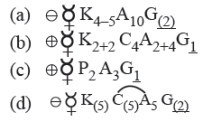
Correct Answer: (d)
Tomato and Tobacco belong to the family Solanaceae. Floral formula is (d).
Tomato and Tobacco belong to the family Solanaceae. Floral formula is (d).
Q51. Plants which produce characteristic pneumatophores and show vivipary belong to:
Correct Answer: (a)
Halophytes growing in saline soils show vivipary for seed germination and have pneumatophores for gaseous exchange.
Halophytes growing in saline soils show vivipary for seed germination and have pneumatophores for gaseous exchange.
Q52. What would be the number of chromosomes of the aleurone cells of a plant with 42 chromosomes in its root tip cells ?
Correct Answer: (b)
Root tip is 2n = 42. So n = 21. Aleurone layer is 3n (Endosperm). 3 * 21 = 63.
Root tip is 2n = 42. So n = 21. Aleurone layer is 3n (Endosperm). 3 * 21 = 63.
Q53. The coconut water and the edible part of coconut are equivalent to :
Correct Answer: (a)
Liquid endosperm is the edible part of coconut.
Liquid endosperm is the edible part of coconut.
Q54. In a cereal grain the single cotyledon of embryo is represented by
Correct Answer: (a)
Single cotyledon of embryo in cereal grain is represented by scutellum.
Single cotyledon of embryo in cereal grain is represented by scutellum.
Q55. Coconut fruit is a :
Correct Answer: (d)
Coconut fruit is a drupe. A drupe is a fleshy fruit with thin skin and central stone containing the seed.
Coconut fruit is a drupe. A drupe is a fleshy fruit with thin skin and central stone containing the seed.
Q56. Which of the following is not a stem modification?
Correct Answer: (a)
Pitcher of Nepenthes is a leaf modification. Thorns of citrus, tendrils of cucumber and flattened structure of Opuntia are all stem modifications.
Pitcher of Nepenthes is a leaf modification. Thorns of citrus, tendrils of cucumber and flattened structure of Opuntia are all stem modifications.
Q57. Keel is the characteristic feature of flower of:
Correct Answer: (a)
Keel type of vexillary aestivation is seen in family Fabaceae (e.g. Indigofera, Pea, Bean).
Keel type of vexillary aestivation is seen in family Fabaceae (e.g. Indigofera, Pea, Bean).
Q58. Which one of the following is a true fruit?
Correct Answer: (d)
The fruit is a mature or ripened ovary. When a fruit develops exclusively from the ovary, it is said to be true fruit. Coconut is a true fruit. Apple, pear, cashew nut are false fruits.
The fruit is a mature or ripened ovary. When a fruit develops exclusively from the ovary, it is said to be true fruit. Coconut is a true fruit. Apple, pear, cashew nut are false fruits.
Q59. Which one of the following fruits is parthenocarpic?
Correct Answer: (c)
Parthenocarpic fruits (eg - banana) are produced without fertilization of ovule.
Parthenocarpic fruits (eg - banana) are produced without fertilization of ovule.
Q60. Which one of the following diagrams represents the placentation in Dianthus?
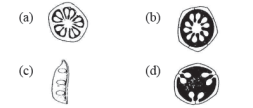
Correct Answer: (b)
Dianthus has free central placentation, represented by diagram (b).
Dianthus has free central placentation, represented by diagram (b).
Q61. Which one of the following statements is correct?
Correct Answer: (d)
Flower is a modified shoot. Tomato is berry. Orchids non-endospermic. Primrose is free-central.
Flower is a modified shoot. Tomato is berry. Orchids non-endospermic. Primrose is free-central.
Q62. Phyllode is present in :
Correct Answer: (c)
Phyllode is present in Australian Acacia. It is modification of leaf in which lamina is absent and petiole becomes flattened and perform the function of food synthesis.
Phyllode is present in Australian Acacia. It is modification of leaf in which lamina is absent and petiole becomes flattened and perform the function of food synthesis.
Q63. Pulses are obtained from
Correct Answer: (a)
Pulses which are economically important belong to the family Fabaceae.
Pulses which are economically important belong to the family Fabaceae.
Q64. Pneumatophores occur in
Correct Answer: (a)
Some lateral roots of mangroves become specialised as pneumatophores in saline mud flats (Halophytes). They are aerial roots that grow upward (negative geotropism) for oxygen intake.
Some lateral roots of mangroves become specialised as pneumatophores in saline mud flats (Halophytes). They are aerial roots that grow upward (negative geotropism) for oxygen intake.
Q65. The technical term used for the androecium in a flower of China rose (Hibiscus rosa sinensis) is:
Correct Answer: (a)
Hibiscus belongs to family Malvaceae. It possess numerous stamens that are called monadelphous (united in one bundle).
Hibiscus belongs to family Malvaceae. It possess numerous stamens that are called monadelphous (united in one bundle).
Q66. Which is floral formula of
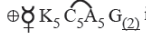
Correct Answer: (a)
This floral formula belongs to Liliaceae (Trimerous, P3+3).
This floral formula belongs to Liliaceae (Trimerous, P3+3).
Q67. The floral formula
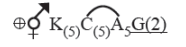 is that of:
is that of:
Correct Answer: (a)
The given floral formula is of tobacco. It belong to the family Solanaceae... Wait. The formula shown in screenshot 95 has K(5) C1+2+(2) A(9)+1 G1. This is FABACEAE (Soyabean). The Solanaceae formula in answer key description (Hint 95) talks about Tobacco but the formula in the image in Q95 is Fabaceae. Let's look at the Image 95 again. The text in the screenshot for Q95 says 'The floral formula... [Image] is that of: (a) Soyabean...'. The image shows K(5) C1+2+(2) A(9)+1 G1. This is distinctively Fabaceae. Soyabean and Sunhemp are Fabaceae. Tobacco is Solanaceae. Tulip is Liliaceae. Between Soyabean and Sunhemp? Both are Fabaceae. Answer key says (a) Soyabean.
The given floral formula is of tobacco. It belong to the family Solanaceae... Wait. The formula shown in screenshot 95 has K(5) C1+2+(2) A(9)+1 G1. This is FABACEAE (Soyabean). The Solanaceae formula in answer key description (Hint 95) talks about Tobacco but the formula in the image in Q95 is Fabaceae. Let's look at the Image 95 again. The text in the screenshot for Q95 says 'The floral formula... [Image] is that of: (a) Soyabean...'. The image shows K(5) C1+2+(2) A(9)+1 G1. This is distinctively Fabaceae. Soyabean and Sunhemp are Fabaceae. Tobacco is Solanaceae. Tulip is Liliaceae. Between Soyabean and Sunhemp? Both are Fabaceae. Answer key says (a) Soyabean.
Q68. The gynoecium consists of many free pistils in flowers of
Correct Answer: (d)
The female reproductive part of a flower is gynoecium. It is syncarpous (fused) in tomato/papaver but apocarpous (free) in Michelia.
The female reproductive part of a flower is gynoecium. It is syncarpous (fused) in tomato/papaver but apocarpous (free) in Michelia.
Q69. The embryo in sunflower has
Correct Answer: (b)
Sunflower is a dicotyledonous plant. Hence its embryo has two cotyledons.
Sunflower is a dicotyledonous plant. Hence its embryo has two cotyledons.
Q70. The ovary is half inferior in :
Correct Answer: (c)
The ovary is half inferior in Plum, Rose, Peach (Perigynous). Mustard/Brinjal = Superior. Sunflower = Inferior.
The ovary is half inferior in Plum, Rose, Peach (Perigynous). Mustard/Brinjal = Superior. Sunflower = Inferior.
Q71. Tetradynamous stamens are found in family
Correct Answer: (c)
Tetradynamous stamens consist of four long-sized stamens and two short-sized stamens. Such kind of stamens are found in family Cruciferae e.g. Sarsoo.
Tetradynamous stamens consist of four long-sized stamens and two short-sized stamens. Such kind of stamens are found in family Cruciferae e.g. Sarsoo.
Q72. Long filamentous threads protruding at the end of the young cob of maize are
Correct Answer: (a)
Long filamentous threads of maize are the styles of the ovaries. In fact, these are the longest styles in plants (silk).
Long filamentous threads of maize are the styles of the ovaries. In fact, these are the longest styles in plants (silk).
Q73. The ovary is half inferior in flowers of
Correct Answer: (a)
The ovary is half-inferior in flowers of peach (Perigynous).
The ovary is half-inferior in flowers of peach (Perigynous).
Q74. Pentamerous, actinomorphic flowers, bicarpellary ovary with oblique septa and fruit a capsule of berry, are characteristic features of
Correct Answer: (b)
These are characteristic features of family solanaceae.
These are characteristic features of family solanaceae.
Q75. Juicy hair-like structures observed in the lemon fruit develop from
Correct Answer: (d)
The juicy hair – like structures in the lemon fruit develop from the inner side of endocarp (from the placenta).
The juicy hair – like structures in the lemon fruit develop from the inner side of endocarp (from the placenta).
Q76. What is eye of potato?
Correct Answer: (a)
The 'eyes' on potato tuber indicate axillary buds at the nodes.
The 'eyes' on potato tuber indicate axillary buds at the nodes.
Q77. Aril represents the edible part of
Correct Answer: (b)
Aril (or arillus) is a fleshy covering of certain seeds formed from the funiculus attachment point of the seed. The aril is the edible part of litchi.
Aril (or arillus) is a fleshy covering of certain seeds formed from the funiculus attachment point of the seed. The aril is the edible part of litchi.
Q78. How many plants among China rose, Ocimum, sunflower, mustard, Alstonia, guava, Calotropis and Nerium (Oleander) have opposite phyllotaxy?
Correct Answer: (b)
Ocimum, Guava, Calotropis have opposite phyllotaxy. (China rose, Sunflower, Mustard = Alternate; Alstonia, Nerium = Whorled).
Ocimum, Guava, Calotropis have opposite phyllotaxy. (China rose, Sunflower, Mustard = Alternate; Alstonia, Nerium = Whorled).
Q79. Stems modified into flat green organs performing the functions of leaves are known as
Correct Answer: (c)
Phylloclade refers to a portion of a flattened leaf-like stem or branch with multiple nodes and internodes.
Phylloclade refers to a portion of a flattened leaf-like stem or branch with multiple nodes and internodes.
Q80. Floral features are chiefly used in Angiosperms identification because
Correct Answer: (c)
Reproductive parts (floral features) are more stable and conservative than vegetative parts, which exhibit changes due to the environmental factors quite readily.
Reproductive parts (floral features) are more stable and conservative than vegetative parts, which exhibit changes due to the environmental factors quite readily.
Q81. Tricarpellary syncarpous gynoecium is found in flowers of
Correct Answer: (a)
The Liliaceae are a huge variety, comprising about 280 genera and 4000 species of perennial herbs mostly. It is characterized by tricarpellary syncarpous gynoecium.
The Liliaceae are a huge variety, comprising about 280 genera and 4000 species of perennial herbs mostly. It is characterized by tricarpellary syncarpous gynoecium.
Q82. Winged pollen grains are present in
Correct Answer: (c)
Winged pollen grains are present in Pinus. Each pollen grain has two wing-like structures which enables it to float in air for dispersal.
Winged pollen grains are present in Pinus. Each pollen grain has two wing-like structures which enables it to float in air for dispersal.
Q83. New Banana plants develop from
Correct Answer: (b)
Cultivated bananas are parthenocarpic, which makes them sterile and unable to produce viable seeds. Lacking seeds, another form of propagation is required (sucker).
Cultivated bananas are parthenocarpic, which makes them sterile and unable to produce viable seeds. Lacking seeds, another form of propagation is required (sucker).
Q84. Which of the following is a flowering plant with nodules containing filamentous nitrogen-fixing micro-organism
Correct Answer: (d)
Casuarina equisetifolia is a deciduous tree with non-leguminous nodules containing Frankia (filamentous) for N2 fixation.
Casuarina equisetifolia is a deciduous tree with non-leguminous nodules containing Frankia (filamentous) for N2 fixation.
Q85. Germination of seed within fruit is
Correct Answer: (b)
In plants, vivipary occurs when seeds or embryos begin to develop before they detach from the parent.
In plants, vivipary occurs when seeds or embryos begin to develop before they detach from the parent.
Q86. The type of placentation in which ovary is syncarpous, unilocular and ovules on sutures is called
Correct Answer: (b)
In parietal placentation, the ovule develop on the inner wall of the ovary or in peripheral part. Ovary is one-chambered but becomes two-chambered due to formation of the false septum.
In parietal placentation, the ovule develop on the inner wall of the ovary or in peripheral part. Ovary is one-chambered but becomes two-chambered due to formation of the false septum.
Q87. Among bitter gourd, mustard, brinjal, pumpkin, china rose, lupin, cucumber, sunhemp, gram, guava, bean, chilli, plum, petunia, tomato, rose, withania, potato, onion, aloe and tulip how many plants have hypogynous flower?
Correct Answer: (b)
Hypogynous flowers: Mustard, brinjal, china rose, lupin, sunhemp, gram, bean, chilli, petunia, tomato, withania, potato, onion, aloe, tulip (15). (Bitter gourd, pumpkin, cucumber, guava = Epigynous; Plum, rose = Perigynous).
Hypogynous flowers: Mustard, brinjal, china rose, lupin, sunhemp, gram, bean, chilli, petunia, tomato, withania, potato, onion, aloe, tulip (15). (Bitter gourd, pumpkin, cucumber, guava = Epigynous; Plum, rose = Perigynous).
Q88. Placenta and pericarp are both edible portions in:
Correct Answer: (c)
In Tomato the edible part is pericarp and placenta.
In Tomato the edible part is pericarp and placenta.
Q89. Which is correct pair for edible part?
Correct Answer: (d)
Date palm edible part is Mesocarp. Tomato is Pericarp & Placenta. Maize is Endosperm/Embryo. Guava is Thalamus & Pericarp.
Date palm edible part is Mesocarp. Tomato is Pericarp & Placenta. Maize is Endosperm/Embryo. Guava is Thalamus & Pericarp.
Q90. Mango juice is got from
Correct Answer: (b)
Mesocarp is the edible part of Mangifera indica (Mango).
Mesocarp is the edible part of Mangifera indica (Mango).
Q91. Buttress roots are found in
Correct Answer: (c)
Buttress roots are asymmetrically thickened prop roots found at the base of certain trees like Terminalia, Salmalia etc.
Buttress roots are asymmetrically thickened prop roots found at the base of certain trees like Terminalia, Salmalia etc.
Q92. Fruit of Mangifera indica is
Correct Answer: (b)
Drupe is a fleshy one seeded, indehiscent fruit eg. Mangifera indica.
Drupe is a fleshy one seeded, indehiscent fruit eg. Mangifera indica.
Q93. What type of placentation is seen in sweet pea?
Correct Answer: (c)
In sweet pea, the gynoecium is monocarpellary and bears a single placenta along the junction of two fused margins, this is called marginal placentation.
In sweet pea, the gynoecium is monocarpellary and bears a single placenta along the junction of two fused margins, this is called marginal placentation.
Q94. Vivipary is
Correct Answer: (d)
Vivipary germination is the characteristic mode of seed germination in Rhizophora (Mangrove).
Vivipary germination is the characteristic mode of seed germination in Rhizophora (Mangrove).
Q95. Flowers are zygomorphic in :
Correct Answer: (b)
When a flower can be divided into two similar halves only in one particular vertical plane, it is zygomorphic, e.g. pea, gulmohar, bean, etc.
When a flower can be divided into two similar halves only in one particular vertical plane, it is zygomorphic, e.g. pea, gulmohar, bean, etc.
Q96. Epipetalous stamens with free filaments and fused anthers occur in
Correct Answer: (b)
Epipetalous stamens (stamens attached to petals) is characteristic of Solanaceae. (Syngenesious condition - fused anthers - is Asteraceae, but question says 'epipetalous' first. Solanaceae is the primary example of epipetalous in textbooks). Answer key says (b).
Epipetalous stamens (stamens attached to petals) is characteristic of Solanaceae. (Syngenesious condition - fused anthers - is Asteraceae, but question says 'epipetalous' first. Solanaceae is the primary example of epipetalous in textbooks). Answer key says (b).
Q97. The below floral formula is of:
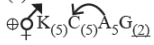
Correct Answer: (b)
Floral formula of Petunia (solanaceae) is shown.
Floral formula of Petunia (solanaceae) is shown.
Q98. Which part of the coconut produces coir?
Correct Answer: (b)
Coir is a coarse fibre extracted from the fibrous outer shell of a coconut (Mesocarp).
Coir is a coarse fibre extracted from the fibrous outer shell of a coconut (Mesocarp).
Q99. The correct floral formula of chilli is :
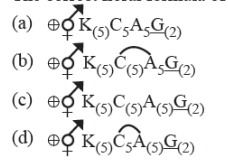
Correct Answer: (b)
Chilli pepper is the fruit of plants from the genus Capsicum which are members of the nightshade family, Solanaceae. Formula (b) is correct.
Chilli pepper is the fruit of plants from the genus Capsicum which are members of the nightshade family, Solanaceae. Formula (b) is correct.
Q100. Botanical name of Cauliflower is
Correct Answer: (c)
Cauliflower has the scientific name Brassica oleracea belonging to the variety botrytis.
Cauliflower has the scientific name Brassica oleracea belonging to the variety botrytis.
Q101. An example of axile placentation is:
Correct Answer: (b)
In flowering plants, placentation occurs where the ovules are attached inside the ovary. An example of axile placentation is citrus (lemon).
In flowering plants, placentation occurs where the ovules are attached inside the ovary. An example of axile placentation is citrus (lemon).
Q102. Placentation, in which ovules develop on the inner wall of the ovary or in peripheral part, is:
Correct Answer: (c)
In parietal placentation the ovules develop on the inner wall of ovary or in peripheral part and number of placentae corresponds to the number of carpels.
In parietal placentation the ovules develop on the inner wall of ovary or in peripheral part and number of placentae corresponds to the number of carpels.
Q103. Which one of the following statements is correct with respect to the plant species and its use?
Correct Answer: (b)
Manihot is the scientific name for tapioca, a tuber rich in starch. Hibiscus esculentus is okra (bhindi).
Manihot is the scientific name for tapioca, a tuber rich in starch. Hibiscus esculentus is okra (bhindi).
Q104. How many plants in the list given below have marginal placentation? Mustard, Gram, Tulip, Asparagus, Arhar, Sun hemp, Chilli, Colchicine, Onion, Moong, Pea, Tobacco, Lupin
Correct Answer: (c)
Marginal placentation is found in Gram, Arhar, Sun hemp, Moong, Pea & Lupin (Fabaceae family). (6 plants).
Marginal placentation is found in Gram, Arhar, Sun hemp, Moong, Pea & Lupin (Fabaceae family). (6 plants).
Q105. Sweet potato is homologous to
Correct Answer: (d)
Sweet potato and turnip both are roots that become modified for special functions, the most common being the formation of tuberous roots for food storage. Potato, Colocasia, and Ginger are stem modifications.
Sweet potato and turnip both are roots that become modified for special functions, the most common being the formation of tuberous roots for food storage. Potato, Colocasia, and Ginger are stem modifications.
Q106. Leaves become modified into spines in:-
Correct Answer: (d)
In Opuntia, leaves become modified into spines to avoid transpiration so as to save water for desert adaptation. The stems of this plant appear like-leaf (phylloclades).
In Opuntia, leaves become modified into spines to avoid transpiration so as to save water for desert adaptation. The stems of this plant appear like-leaf (phylloclades).