
Human Reproduction
Human reproduction is the biological process through which new individuals are produced. It involves the male and female reproductive systems, the formation of gametes (sperm and egg), fertilisation, and the development of the embryo. The process continues with implantation, pregnancy, childbirth, and lactation, ensuring the survival of the species.
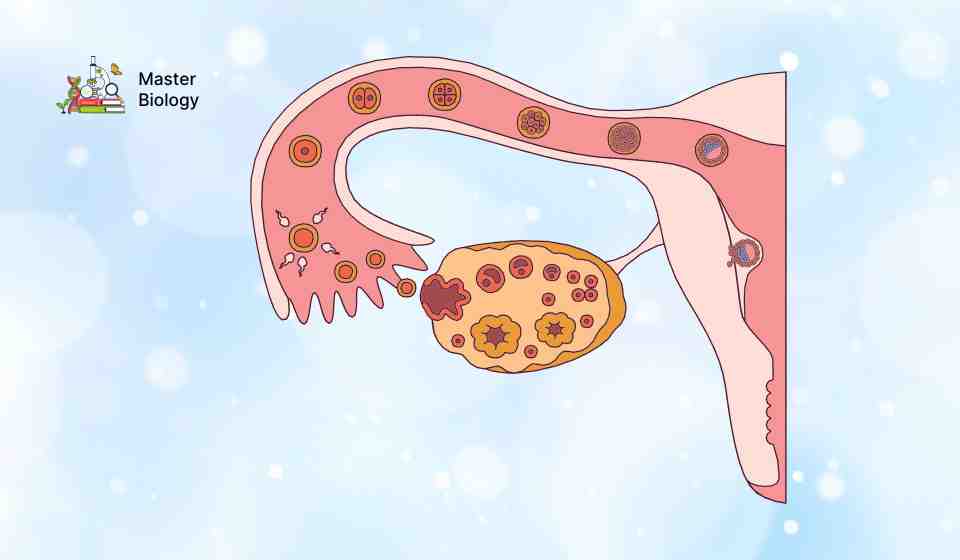
🚻 Human Reproduction
- 🧫 Reproductive Anatomy & Physiology
- ♂♀ Male and female reproductive systems
- 🔬 Microscopic anatomy of testis and ovary
- 🔄 Gamete Formation & Reproductive Cycles
- 💧 Gametogenesis: spermatogenesis & oogenesis
- 🩸 Menstrual cycle
- 🥚 Fertilisation and Early Development
- 🟠 Fertilisation
- 🔘 Embryo development up to blastocyst formation
- 🔴 Implantation
- 🤰 Pregnancy and Childbirth
- 🫃 Pregnancy and placenta formation
- 👼 Parturition
- 🤱 Lactation
⚕️ Reproductive Health
- 🏥 Health & Disease Prevention
- 👩❤️👨 Need for reproductive health
- ⚠️ Prevention of sexually transmitted diseases (STD)
- 🗓️ Family Planning & Contraception
- 🛡️ Birth control: Need and methods
- 💊 Contraception
- ❌ Medical Termination of Pregnancy (MTP)
- 🩺 Assisted Reproductive Technologies & Diagnostics
- 🫃💉 Amniocentesis
- 🧪 Infertility and assisted reproductive technologies – IVF, ZIFT, GIFT

Strengthen Concepts, Reduce Surprises
Solve Previous Years’ Questions
Crack Exams with Confidence — Practice Previous Years’ Questions Today!
Human Reproduction
Structural Organisation in Flowering Plants
Flowering plants, or angiosperms, dominate the terrestrial landscape, showcasing an extraordinary diversity…
Morphology and Taxonomy of Plant Families
Plant families represent fundamental units in botanical classification, grouping together species that…
Structural Organisation in Animals
Structural Organisation in Animals reveals how the animal kingdom showcases a breathtaking…