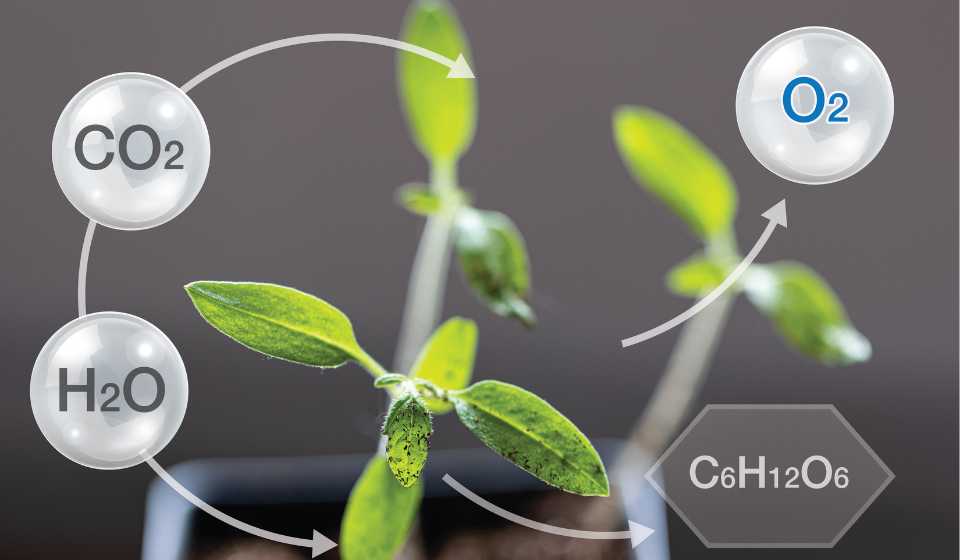
Photosynthesis is the process that powers life on Earth, converting sunlight, water, and carbon dioxide into food. However, a critical enzyme involved in this process, Rubisco, has a flaw: it can be fooled by oxygen, leading to a wasteful process called photorespiration. To overcome this challenge, plants have evolved three distinct biochemical pathways: C3, C4, and CAM. These pathways represent different evolutionary solutions to the problem of efficiently capturing carbon dioxide in various environmental conditions.
1. The C3 Pathway: The Standard Model
The C3 pathway is the most common and ancient form of photosynthesis, used by approximately 85% of plant species, including major crops like rice, wheat, soybeans, and all trees.
- How it Works:
- Carbon Fixation: CO₂ from the air enters the leaf through pores called stomata. Inside the chloroplast of mesophyll cells, the enzyme Rubisco attaches the CO₂ to a 5-carbon compound called RuBP (Ribulose-1,5-bisphosphate).
- First Product: This reaction instantly forms an unstable 6-carbon compound that splits into two molecules of a 3-carbon compound called 3-Phosphoglycerate (3-PGA). This is why it’s called the C3 pathway.
- The Calvin Cycle: The 3-PGA is then converted into sugars (like glucose) using energy from ATP and NADPH in the subsequent steps of the Calvin Cycle.
- The Problem: Photorespiration
Rubisco is not very selective. When it is hot and dry, plants close their stomata to conserve water. This causes CO₂ levels to drop and O₂ levels to rise inside the leaf. Rubisco then binds with O₂ instead of CO₂, initiating photorespiration.- Consequences of Photorespiration:
- It consumes ATP and energy without producing any sugar.
- It actually releases CO₂, undoing the work of photosynthesis.
- It significantly reduces photosynthetic efficiency in hot, dry, and bright conditions.
- Consequences of Photorespiration:
Examples of C3 Plants: Rice, Wheat, Soybeans, Oats, Barley, Potatoes, and most trees and lawn grasses.
2. The C4 Pathway: The Spatial Solution
C4 plants have evolved a clever “add-on” to the C3 pathway that acts as a CO₂ concentration mechanism. This minimizes photorespiration by spatially separating the initial carbon fixation from the Calvin Cycle.
- How it Works (Spatial Separation):
- Initial Fixation in Mesophyll Cells: CO₂ enters the leaf and is immediately fixed not by Rubisco, but by the enzyme PEP carboxylase. This enzyme has a very high affinity for CO₂ and does not bind with O₂. It combines CO₂ with a 3-carbon compound (PEP) to form a 4-carbon compound (Oxaloacetate, which is converted to Malate or Aspartate). Hence the name C4 pathway.
- Transfer to Bundle-Sheath Cells: The 4-carbon compound is then transported from the mesophyll cells to specialized cells surrounding the leaf veins, called bundle-sheath cells.
- CO₂ Release and Calvin Cycle: Inside the bundle-sheath cells, the 4-carbon compound is broken down, releasing a concentrated burst of CO₂ right at the location of the Rubisco enzyme. This high local CO₂ concentration saturates Rubisco, effectively preventing photorespiration. The Calvin Cycle then proceeds normally.
- Advantage: C4 plants are highly efficient in hot, sunny, and dry environments. They can keep their stomata partially closed, reducing water loss while still maintaining high photosynthesis rates.
Examples of C4 Plants: Sugarcane, Corn, Sorghum, Millet, and Crabgrass.
3. The CAM Pathway: The Temporal Solution
CAM (Crassulacean Acid Metabolism) plants have evolved a different strategy to avoid photorespiration: they separate the processes in time rather than in space. This adaptation is supremely effective in extremely arid environments.
- How it Works (Temporal Separation):
- Nighttime (CO₂ Capture): At night, when it is cooler and more humid, the plant opens its stomata. CO₂ enters and is fixed by PEP carboxylase into a 4-carbon organic acid (like Malic Acid). This acid is then stored in large vacuoles within the mesophyll cells.
- Daytime (Sugar Production): During the day, the plant closes its stomata tightly to conserve water. The stored organic acids are broken down, releasing CO₂ inside the same mesophyll cell. This CO₂ is then funneled directly into the Calvin Cycle, which is powered by the sunlight captured during the day.
- Advantage: CAM plants have the highest water-use efficiency of all. They lose vastly less water per unit of carbon fixed than C3 or C4 plants, allowing them to thrive in deserts.
- Disadvantage: The storage capacity for acids is limited, so their overall growth rate is typically slower than C4 or C3 plants under ideal conditions.
Examples of CAM Plants: Cacti, Pineapples, Orchids, Jade Plants, Aloe Vera, and Agave.
Comparison Table: C3 vs. C4 vs. CAM Pathways
| Feature | C3 Plants | C4 Plants | CAM Plants |
|---|---|---|---|
| Definition | The standard photosynthetic pathway where the first product is a 3-carbon compound. | A pathway that adds a CO₂ concentration mechanism to avoid photorespiration. | A pathway where carbon is fixed at night and used during the day to minimize water loss. |
| Primary CO₂ Acceptor | RuBP (5-carbon) | PEP (3-carbon) in mesophyll cells; RuBP in bundle-sheath cells | PEP (3-carbon) at night; RuBP during the day |
| Key Enzyme(s) | Rubisco | PEP Carboxylase (in mesophyll) and Rubisco (in bundle-sheath) | PEP Carboxylase (at night) and Rubisco (during day) |
| First Stable Product | 3-PGA (a 3-carbon acid) | OAA (a 4-carbon acid) | OAA (a 4-carbon acid) |
| Cell Type for Carbon Fixation | Mesophyll cells only | Mesophyll cells (initial fixation) and Bundle-sheath cells (Calvin Cycle) | Mesophyll cells only |
| Mechanism to Reduce Photorespiration | None; high photorespiration in hot/dry conditions | Spatial Separation of initial fixation and Calvin Cycle | Temporal Separation of initial fixation (night) and Calvin Cycle (day) |
| Stomatal Opening | Day | Day | Night |
| Water-Use Efficiency | Low | Medium | Very High |
| Photosynthetic Rate | High in cool, moist conditions | High in high light & temperature | Low to Moderate |
| Growth Rate | Moderate | High | Slow |
| Optimal Climate | Cool, moist, temperate environments | Hot, sunny, with moderate drought | Very hot, arid, desert environments |
| Examples | Rice, Wheat, Soybeans, Trees | Sugarcane, Maize (Corn), Sorghum | Cacti, Pineapple, Aloe, Orchids |
In conclusion, the C3, C4, and CAM pathways are remarkable examples of evolutionary adaptation. The C3 pathway is the baseline but is vulnerable to waste. The C4 pathway evolved a spatial “supercharger” to thrive in hot, sunny grasslands. The CAM pathway adopted a night-shift schedule to become the ultimate water-saver of the desert. Together, they demonstrate the incredible flexibility of life in its quest to harness the power of the sun.