In nature, no population exists in isolation. The survival, reproduction, and distribution of every species are profoundly influenced by its interactions with other species in the community. These population interactions (or species interactions) are fundamental ecological processes that shape ecosystems, drive evolutionary change, and determine the structure of biological communities.
These interactions are classified based on their impact on the interacting species, denoted as positive (+), negative (-), or neutral (0). The following are the most significant types of population interactions.
1. Mutualism (+, +) – A Partnership for Profit
Mutualism is an interaction between two species where both partners benefit. It is a form of symbiosis (“living together”), often involving close and long-term physical association.
- Ecological Impact: Mutualisms enhance the survival, growth, or reproduction of both species. They are crucial for the functioning of many ecosystems, such as in pollination and nutrient cycling.
- Examples:
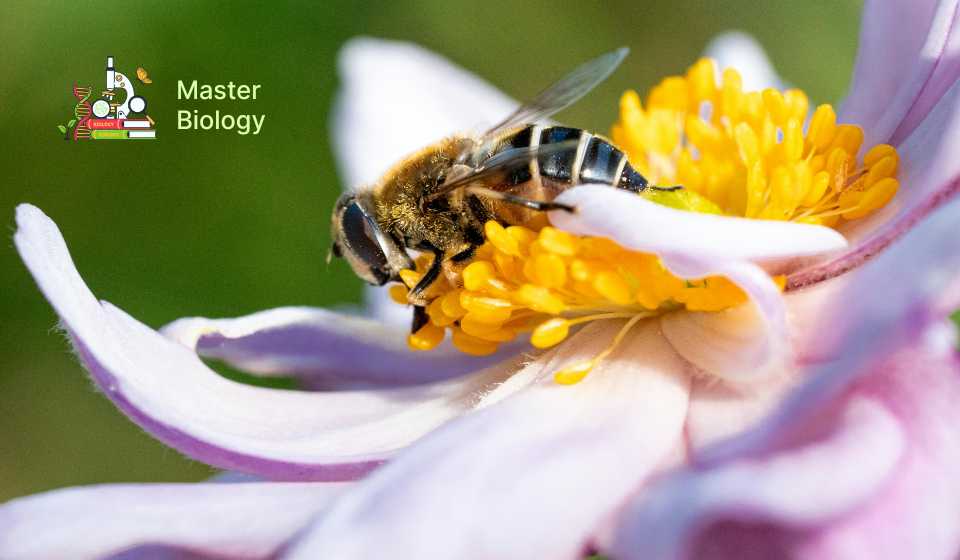
- Pollination: Bees, birds, and bats obtain nectar (food) from flowers, while the plants get their pollen transferred, enabling cross-fertilization.
- Lichen: A symbiotic association between a fungus and an alga (or cyanobacterium). The fungus provides structure and absorbs water and minerals, while the alga performs photosynthesis, providing food for both.
- Nitrogen-Fixing Bacteria and Legumes: Bacteria (Rhizobium) living in root nodules of plants like peas and beans convert atmospheric nitrogen into a usable form for the plant. In return, the plant provides the bacteria with carbohydrates and a protected habitat.
- Cleaner Fish and Hosts: Cleaner wrasses eat parasites and dead tissue off larger fish. The cleaner gets a meal, and the host gets groomed and has its health improved.
2. Competition (-, -) – The Struggle for a Shared Resource
Competition is an interaction where both species are harmed as they vie for the same limited resources that are essential for their survival and reproduction (e.g., food, water, light, space, mates).
- Ecological Impact: Competition limits the population size and distribution of species. It is a major force behind evolutionary adaptation, often leading to resource partitioning, where competing species evolve to use resources in slightly different ways to reduce direct competition.
- Types of Competition:
- Intraspecific Competition: Competition within members of the same species. This is often the most intense form of competition because they have identical resource requirements. (e.g., two male deer fighting for mates, trees in a forest competing for light).
- Interspecific Competition: Competition between different species.
- Examples:
- Gause’s Competitive Exclusion Principle: In a classic experiment, the paramecium species Paramecium aurelia and Paramecium caudatum were grown together in a culture with a limited food source. P. aurelia outcompeted P. caudatum, driving it to extinction. This demonstrates that two species with identical niches cannot coexist indefinitely.
- Character Displacement: On the Galápagos Islands, different species of finches have evolved beaks of different sizes. Where they live together, their beak sizes differ, allowing them to eat different-sized seeds. Where they live alone, their beak sizes are more similar. This is an evolutionary solution to competition.
3. Predation (+, -) – The Hunter and the Hunted
Predation is an interaction where one species, the predator, kills and eats another species, the prey.
- Ecological Impact: Predation is a major influence on population control. It directly reduces the prey population while providing energy to the predator population. This interaction drives the classic predator-prey cycle, where the populations of predators and prey rise and fall in linked oscillations. Predation also acts as a powerful agent of natural selection, favoring traits in prey that help them avoid capture (e.g., speed, camouflage, toxins) and traits in predators that make them more effective hunters (e.g., sharp claws, keen eyesight).
- Examples:
- A lion (predator) hunting a zebra (prey).
- A hawk catching a mouse.
- A Venus flytrap consuming an insect.
- A blue whale filtering and consuming krill.
4. Parasitism (+, -) – The Uninvited Guest
Parasitism is an interaction where one species, the parasite, derives its nourishment from another species, the host, which is harmed in the process. Unlike predation, the parasite does not usually kill its host immediately, as it depends on the host for survival and reproduction over a period of time.
- Ecological Impact: Parasites can regulate host populations, reduce host fitness (growth, reproduction, survival), and influence host behavior. They are a major source of evolutionary pressure.
- Characteristics:
- The parasite is typically much smaller than the host.
- The parasite lives on or inside the host’s body.
- Types of Parasites:
- Ectoparasites: Live on the external surface of the host (e.g., ticks, lice, leeches, aphids).
- Endoparasites: Live inside the host’s body (e.g., tapeworms, malaria-causing Plasmodium, bacteria, viruses).
- Brood Parasitism: A behavioral strategy where one animal (e.g., the cuckoo bird) lays its eggs in the nest of another species. The host bird then raises the cuckoo chick, often at the expense of its own offspring.
5. Other Important Interactions
While mutualism, competition, predation, and parasitism are the core interactions, two others are ecologically significant.
A. Commensalism (+, 0) – A Free Ride
One species benefits, and the other is neither helped nor harmed.
- Example: An orchid growing as an epiphyte on a branch of a large tree. The orchid gets support and access to sunlight but does not take nutrients from the tree. The tree is unaffected. Barnacles attaching to a whale’s skin also represent commensalism.
B. Amensalism (-, 0) – Accidental Harm
One species is harmed, while the other is unaffected.
- Example: A large, heavy animal like an elephant walking through the forest may accidentally step on and kill small insects or plants, without being affected itself. Another example is the black walnut tree, which releases a chemical (juglone) that inhibits the growth of nearby plants, reducing competition.
Summary Table of Population Interactions
| Interaction | Effect on Species A | Effect on Species B | Brief Description | Example |
|---|---|---|---|---|
| Mutualism | + | + | Both species benefit | Bee and flower |
| Competition | – | – | Both species are harmed by shared resource limitation | Lions and hyenas competing for prey |
| Predation | + | – | One species (predator) kills and eats the other (prey) | Hawk and mouse |
| Parasitism | + | – | One species (parasite) benefits by living on/in another (host), which is harmed | Tapeworm and human |
| Commensalism | + | 0 | One species benefits, the other is unaffected | Orchid on a tree |
| Amensalism | – | 0 | One species is harmed, the other is unaffected | Elephant stepping on grass |
In conclusion, population interactions are the intricate threads that weave the fabric of ecological communities. They are not static but are dynamic relationships that drive the flow of energy, the cycling of nutrients, and the relentless process of evolution through natural selection. Understanding these interactions is key to understanding the complexity and resilience of life on Earth.