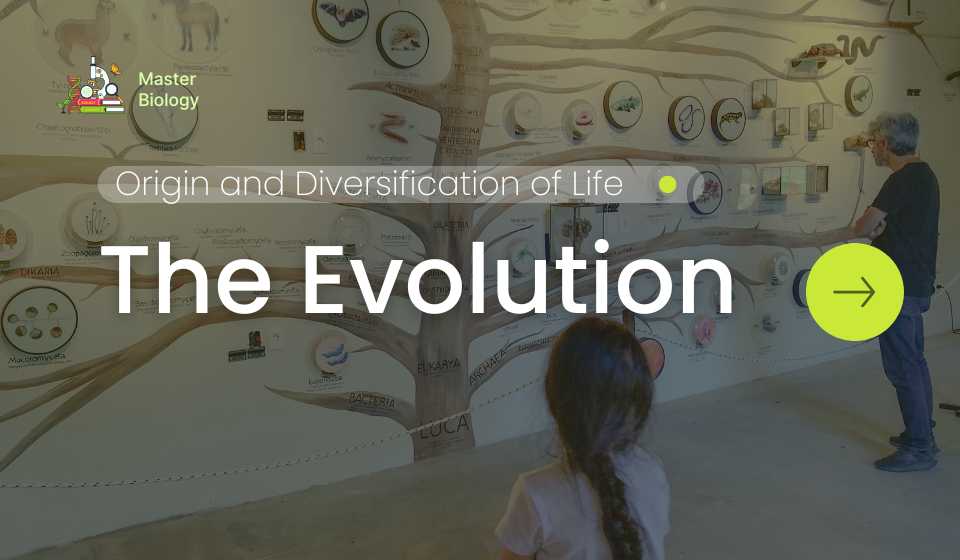
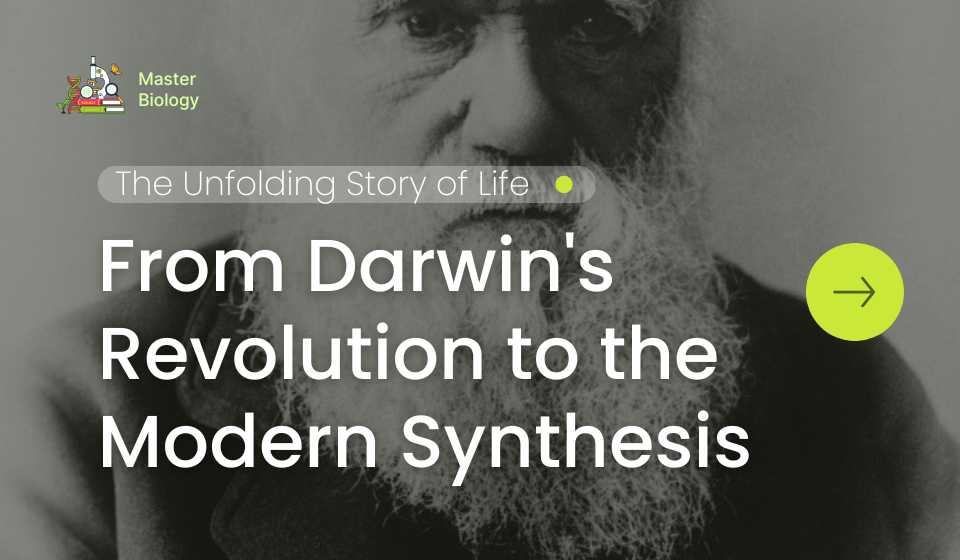
The theory of evolution is the unifying framework of the biological sciences, explaining the breathtaking diversity of life on Earth as the product of gradual change over vast stretches of time. However, this theory is not a single, static idea. It is itself a story of scientific evolution, beginning with Charles Darwin’s brilliant insight and maturing into the robust, gene-centered Modern Synthetic Theory. Understanding this progression is key to appreciating how life’s history is written.
Part 1: Darwin’s Revolutionary Contribution
Before Charles Darwin, the prevailing view in the Western world was that species were immutable, created in their present forms. The concept of “change over time” was radical, and while others had floated ideas of transformation, it was Darwin who provided a comprehensive, evidence-based mechanism.
The Voyage of the Beagle and Key Observations
From 1831 to 1836, Darwin served as a naturalist aboard HMS Beagle. His observations during this journey were pivotal:
- Biogeography: He noted that closely related species were often found in adjacent geographic regions (e.g., the rheas of South America), while similar habitats on different continents (e.g., the grasslands of Africa and South America) were home to entirely different species. This suggested that species were not placed arbitrarily but evolved in situ from common ancestors.
- Fossils: In South America, Darwin discovered fossils of extinct giant armadillos that closely resembled the living, smaller armadillos in the same area. This indicated a historical connection between past and present species.
- The Galápagos Islands: This archipelago was a natural laboratory. Darwin observed that the finches on different islands had beaks uniquely suited to their local food sources. Similarly, the tortoises had different shell shapes depending on their island. He concluded that these were not separate creations but varieties that had diverged from a common ancestor from the mainland.
The Mechanism: Natural Selection
Darwin spent decades refining his ideas, spurred on by his observations and his reading of Thomas Malthus’s work on population growth. He synthesized his theory into two core principles:
- Descent with Modification: All organisms are related through descent from a common ancestor in the remote past. Over generations, lineages change, diverging into new forms.
- Natural Selection: This is the primary engine of evolutionary change. It rests on three undeniable facts and one inescapable conclusion:
- Variation: Individuals in a population vary in their traits.
- Heritability: Some of these variations are passed from parents to offspring.
- Struggle for Existence: Resources are limited, and organisms produce more offspring than can possibly survive, leading to competition.
From these facts, Darwin deduced that individuals with heritable traits better suited to their environment would be more likely to survive and reproduce. Over time, these advantageous traits would become more common in the population, leading to a gradual change in the species’ characteristics—adaptation.
Darwin’s 1859 book, On the Origin of Species, presented this argument with a mountain of evidence. It was a monumental achievement, providing a natural, testable explanation for the design and diversity of life without invoking a supernatural creator.
The Gaps in Darwin’s Theory
Despite its power, Darwin’s theory had significant weaknesses, primarily due to the scientific knowledge of his time:
- The Mechanism of Heredity: Darwin did not understand how traits were inherited. The prevailing “blending inheritance” model would have diluted advantageous variations quickly.
- The Source of Variation: He could not explain the origin of the new variations upon which selection acted.
- The Nature of Speciation: His explanation for how a single species splits into two was less developed.
Part 2: The Modern Synthetic Theory of Evolution
The 20th century saw a revolution in biology that filled the gaps in Darwin’s theory. The discovery of genetics, combined with statistics and other fields, led to the “Modern Synthesis,” a unified framework that emerged between the 1920s and 1950s.
The Synthesis integrated Darwin’s theory of natural selection with:
- Mendelian Genetics: Gregor Mendel’s work, rediscovered in 1900, showed that traits are passed on in discrete units (genes) that do not blend but are reshuffled during reproduction. This solved the problem of how variation is maintained.
- Population Genetics: Pioneered by scientists like Ronald Fisher, J.B.S. Haldane, and Sewall Wright, this field applied mathematical models to show how allele frequencies in a population change over time under the influence of evolutionary forces.
- Paleontology, Systematics, and Comparative Anatomy: These fields provided the historical and morphological evidence that fit perfectly with the genetic mechanisms.
The Core Principles of the Modern Synthesis
The Modern Synthesis refined and expanded evolutionary theory into a more precise and powerful model:
- The Population as the Unit of Evolution: Evolution is defined as a change in the allele frequencies in a population’s gene pool over time. It is populations, not individuals, that evolve.
- Mutation as the Raw Material: Genetic variation arises from random mutations in DNA. These mutations create new alleles. While most are neutral or harmful, rare beneficial mutations provide the raw material upon which natural selection can act.
- Natural Selection as the Primary Driving Force: The Synthesis reaffirmed natural selection as the major mechanism for adaptive evolution. It is a non-random process that shifts allele frequencies by favoring traits that enhance survival and reproduction.
- Genetic Recombination: The shuffling of genes during sexual reproduction (meiosis and fertilization) creates new combinations of alleles, vastly increasing the genetic variation within a population without requiring new mutations.
- Other Evolutionary Forces: The Synthesis incorporated other mechanisms that can change allele frequencies:
- Genetic Drift: Random, chance fluctuations in allele frequencies, especially powerful in small populations. It can lead to the loss of variation and is non-adaptive.
- Gene Flow: The transfer of alleles between populations through migration. This can introduce new variation and make distant populations more similar.
- Speciation as a Process: The Synthesis provided a clear model for speciation. When populations become reproductively isolated (through geographic, behavioral, or other barriers), they evolve independently. Given enough time, genetic differences accumulate until they can no longer interbreed, resulting in new species.
Conclusion: A Living Theory
The journey from Darwin’s foundational insight to the Modern Synthesis demonstrates the self-correcting and cumulative nature of science. Darwin identified the what and the why of evolution; the Modern Synthesis provided the how at the genetic level.
Today, evolutionary theory continues to evolve. Discoveries in molecular biology, genomics, and epigenetics are expanding our understanding further, leading to new debates and concepts like evolutionary developmental biology (Evo-Devo). However, the core principles established by the Modern Synthesis—that evolution is a change in allele frequencies driven by mutation, selection, drift, and gene flow—remain the solid, central pillar of our understanding of life’s magnificent and unending story.